Celebrating Great Films


Showing posts with label Japan. Show all posts

Friday, October 07, 2011

Howl's Moving Castle

#219 at time of writing.

It doesn't have to make sense when it's so beautiful!

Hayao Miyazaki and Studio Ghibli have produced some astonishing films, often casting their characters into strange and colourful lands with mad rules of conduct as a metaphor for growing up.

This particular offering is a loose adaptation of the eponymous novel by Diana Wynne Jones, in which a girl suffers a curse that turns her into an old woman, and she must seek the help of an enigmatic young wizard to restore her youth, averting a war in the process.

The thoroughly Japanese perspective on this British fantasy is enchanting. The lush, ambitious animation is endlessly fascinating. The motivation and arc of the main characters is perhaps not as well developed as in some other Miyazaki masterpieces, but that doesn't stop this from being an inspiring, moving and brilliant piece of work.

I shall have to watch me some more Ghibli.

Sunday, February 01, 2009

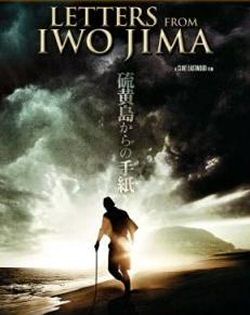
Letters from Iwo Jima

Letters from Iwo Jima#187 at time of writing.

It could have been seen as a gimmick when Clint Eastwood decided to film the story of the Battle of Iwo Jima from both the American perspective (Flags of Our Fathers) and the Japanese perspective (Letters from Iwo Jima). But it is not a gimmick.

This film is remarkably brave, honest and non-Hollywood. It portrays the Japanese soldiers as ordinary people forced by circumstance to battle for a lost cause, abandoned by the mainland and doomed by an insane cultural fear of losing face. It's visceral in scope and personal in tone, and there's always an assured hand in dealing with the performances and characters.

There are some desperately moving scenes as the soldiers and General Kuribayashi gradually realise the hopelessness of their situation. One of the most affecting aspects of the film is the tension between those soldiers that think it treasonous not to commit suicide in the face of failure, and those soldiers - the General included - who doubt the wisdom of such sacrifice.

As you watch the events unfold, you feel fear, loss, anger, and a mixture of sadness and admiration for the courage and persistent humanity of these ill-fated people.

This film is a significant, fascinating achievement.

Tuesday, February 06, 2007

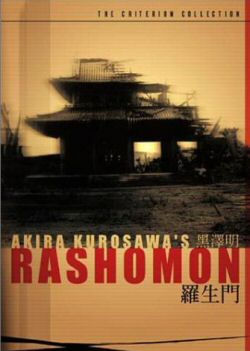
Rashomon

Rashomon#67 at time of writing.

By all accounts, this represented a revolution in filmmaking at the time of its release. In fact, it is often credited as the reason the Academy created the "Best Foreign Film" category.

It certainly has a lot of unusual elements to its structure - a non-linear story with unreliable narrators, and a thoroughly ambiguous conclusion. I enjoyed it for the most part, but I think you definitely have to be in the right mood to watch it.

It's slow and artful, which I think are typical features of Kurosawa films. The overblown, grubby Japanese characters make for amusing viewing. And the concept of re-telling the same story from different perspectives keeps the suspense poised.

It didn't blow me away, but I would definitely give it a second chance.

Thursday, February 01, 2007

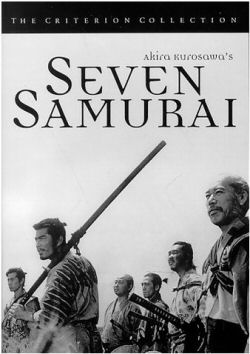
Seven Samurai

Seven Samurai#10 at time of writing.

The trouble with watching classic films is that they were often so influential that you feel like you've seen it all before. So when I sat down to watch this three-hour epic I expected to see a predictable story about brave, powerful and noble samurai warriors conquering all.

Wrong.

I was very surprised to see the samurai portrayed as poor, cowardly, desperate mercenaries. There are no heroes in this film.

In sixteenth century Japan a villager overhears a notorious gang of bandits plotting to ransack the village and steal all their grain. The village elder decides that they must try to hire samurai to defend themselves, but they have no money. It turns out that most of the samurai are so pathetic and desperate that they will work for three square meals a day - although the villagers can barely even afford that.

All this gives rise to personal battles of hope and pride and guilt, not to mention many wonderfully comic exchanges, while the villagers and the samurai prepare for the final showdown.

Many of Akira Kurosawa's films were remade into classic Westerns - in this case, The Magnificent Seven. I don't much like Westerns as a rule, but I liked this.