Celebrating Great Films


Showing posts with label silent film. Show all posts

Monday, January 27, 2014

City Lights

#34 at the time of writing.

A tramp falls in love with a blind flower girl, and woos her with the help of an unreliable millionaire friend.

My reaction to this (American) film was pretty much the polar opposite of my reaction to Metropolis, a contemporary German film that I watched last year. Metropolis felt messy, overacted, unsubtle - but awesome, epic, stylish. City Lights is neat, gentle, sweet - but... well... just a little bit dull.

The movie calls itself out as a pantomime, and it certainly excels at that, with Charlie Chaplin's wonderful comic timing, choreography and pathos carrying the story along. I watched it with my nearly three-year-old daughter and she loved it.

Anyway, I am clearly in the minority with my under-enthusiasm. Orson Welles said this was his favourite movie; Albert Einstein attended the American premiere and George Bernard Shaw the British one. The American Film Institute ranks it as the 11th best film of all time.

This was Charlie Chaplin's first film made during the sound era. He faced extreme pressure to make the film as a talkie, but such was his popularity and power in Hollywood that he was able to complete and release the film as a silent (albeit with recorded music) at a time when the rest of the American motion picture industry had converted to sound.

Charlie Chaplin, ever the stickler, allegedly re-shot the scene in which his character the Little Tramp buys a flower from the blind flower-girl 342 times, as he could not find a satisfactory way of showing that the blind flower-girl thought the mute tramp was wealthy.

Thursday, June 20, 2013

Metropolis

#89 at the time of writing.

A contemporary review of this film by H. G. Wells accused it of "foolishness, cliché, platitude, and muddlement about mechanical progress and progress in general." I wholeheartedly agree - but his damning criticism ignores all that is amazing in this movie.

With Yevgeny's Zamyatin's We having appeared a few years earlier, and Aldous Huxley's Brave New World just around the corner, this kind of dystopic vision was clearly all the rage in 1927. But never before had science fiction been brought to the silver screen so ambitiously.

Epic sets, a cast of thousands, the world's first cinematic humanoid robot, a plot that still resonates today, and all dripping with art deco style. Yes, the acting is hammier than a pigsty and the plot is often overtly silly, but it's a fascinating glimpse into the mindset of the past.

The hordes of German workers marching like machines presages Nazi displays of power. Indeed, it was one of Adolf Hitler's favourite films. Propagandist Joseph Goebbels also took the film's message to heart. In a 1928 speech, using some of the language from the film, he declared: "The political bourgeoisie is about to leave the stage of history. In its place advance the oppressed producers of the head and hand, the forces of Labor, to begin their historical mission."

Famously, due to some over-enthusiastic cuts by the studio after the film foundered at the box office, a quarter of this film was thought lost to the ages for nearly eighty years - until in 2008 the manager of a Buenos Aires cinema club discovered an uncut reel in the archives of his local Cinema Museum.

Sunday, January 15, 2012

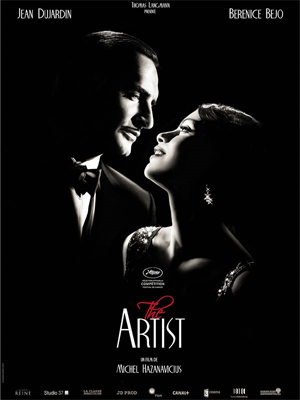
The Artist

#224 at time of writing.

This film is proof, if any were needed, that you don't need colour, sound and spectacle to keep an audience entertained. This nod to the golden age of cinema tells its story in black and white, without dialogue, widescreen or CGI.

Set in 1920s and 30s Hollywood, this is the story of a fictional silent film actor; the peak and fall of his career and the people whose lives he touches. It brims with charm and humour, with characters that you will enjoy spending time with.

It is both wonderfully naive (the story) and yet thoroughly knowing (the loving homages). Very refreshing to see a movie so unabashedly dramatic, romantic, funny, visual. Deservedly collecting many awards, and bound to catch an Oscar or two as well.


Thank goodness profiteering Hollywood studio execs aren't the only people who can get films made; well done to Michel Hazanavicius for persisting with his dream of making a silent movie. This is a gem.

Thursday, June 25, 2009

Don'ts and Be Carefuls

During the relatively socially liberal 1920s and early 30s, Hollywood was increasingly seen as a breeding ground for immorality.

Films frequently included such conservative vices as sexual innuendos, references to homosexuality, miscegenation, illegal drug use, infidelity, abortion and profane language. This reputation was made worse by stories of decadent dope parties, which were connected to the fall of silent film stars like William Desmond Taylor and Fatty Arbuckle.

The Motion Picture Producers and Distributors of America (later renamed to today's MPAA) didn't yet have the clout to enforce censorship. That is, until Will Hays got into his stride.

In October of 1927, Will Hays published a set of censorship guidelines split into things that must never be portrayed on film, and things that required "special care". The Hays Code, which became known in the industry as the Don'ts and Be Carefuls, formed the basis of the guidelines that governed the production of almost all USA motion pictures until 1968, when age-related ratings were introduced.

Below, unadulterated apart from the comments in [square brackets], is the complete original list of Don'ts and Be Carefuls. How times have changed.

Don'ts

1. Pointed profanity - by either title or lip - this includes words "God," "Lord," "Jesus," "Christ" (unless used reverently in connection with proper religious ceremonies), "hell," "damn," "Gawd," and every other profane and vulgar expression, however it may be spelled. [Hence why Clark Gable's famous line in Gone with the Wind was so controversial. Frankly my dear, I think you should see The Aristocrats.]
2. Any licentious or suggestive nudity — in fact or in silhouette; and any lecherous or licentious notice thereof by other characters in the picture. [In silhouette?!]
3. The illegal traffic in drugs. [An odd choice for the one of the few crimes in the Don'ts.]
4. Any inference of sex perversion. [In other words, except for a man kissing a woman (who he's married to) on the cheek, don't show anything.]
5. White slavery. [Why is this at number five? Would portraying it encourage it? Or would it offend the white slavers?]
6. Miscegenation (sex relationships between white and black race). [The same people who supported rules like this have moved on to hating gays and barring them from getting married. And they'll look just as foolish when the history books are written.]
7. Sex hygiene and venereal diseases. [Would that get portrayed a lot if it wasn't banned, do you think?]
8. Scenes of actual childbirth - in fact or in silhouette. [Fake childbirth ok then. Storks.]
9. Children’s sex organs. [Like, babies?]
10. Ridicule of the clergy. [Does the pope shit in the woods?]
11. Willful offense to any nation, race or creed. [Isn't number 6 itself a willful offence to race?]

Be Carefuls

1. The use of the flag.
2. International relations (avoiding picturization in an unfavorable light another country’s religion, history, institutions, prominent people, and citizenry).
3. Arson.
4. The use of firearms.
5. Theft, robbery, safecracking, and dynamiting of trains, mines, buildings, etc. (having in mind the effect which a too-detailed description of these may have upon the moron). [The moron! Ha!]
6. Brutality and possible gruesomeness.
7. Technique of committing murder by whatever method.
8. Methods of smuggling.
9. Third-degree methods. [ie torture]
10. Actual hangings or electrocutions as legal punishment for crime. [Perhaps if you're ashamed about showing it, you shouldn't do it...]
11. Sympathy for criminals.
12. Attitude toward public characters and institutions.
13. Sedition.
14. Apparent cruelty to children and animals.
15. Branding of people or animals.
16. The sale of women, or of a woman selling her virtue.
17. Rape or attempted rape.
18. First-night scenes. [Eh?]
19. Man and woman in bed together.
20. Deliberate seduction of girls.
21. The institution of marriage.
22. Surgical operations.
23. The use of drugs.
24. Titles or scenes having to do with law enforcement or law-enforcing officers.
25. Excessive or lustful kissing, particularly when one character or the other is a "heavy." [A what?!]

Of course, these days the list would be very different:

Don'ts
-

Be Carefuls
1. Two girls, one cup.